Essays from the Old North State #1
Running from tip to tail of North Carolina is a ribbon of sugar-white sandbanks that bow outward into the Atlantic Ocean like the winded sail of a ship. The Outer Banks — sometimes dangerous, always mystical — are a phenomenally beautiful chain of islands, spits, and shoals formed over millions of years of the oceanic roiling of sandy sediment.
The islands are unanchored by an underlying reef structure, meaning each year the unforgiving hurricanes and tropical storms that blast through rearrange their silhouette. New islands rise from the sea while others vanish like Atlantis, inlets and spits materialize at will, while whole villages are buried under 15 feet or more of drifted sand and shell.
Around 500 years ago, a Spanish ship broke its spine in the infamous crisscrossing currents known as the Diamond Shoals and sank, releasing its living cargo — horses — to swim ashore. Today, their sturdy, thick-furred descendants are scattered across hundreds of miles of coastline, beloved by locals and tourists alike. “Banksie ponies,” as they are called, roam freely across hundreds of miles and can even survive Category 5 hurricanes by instinctively heading to higher ground. Survival, it seems, is in their bones.
***
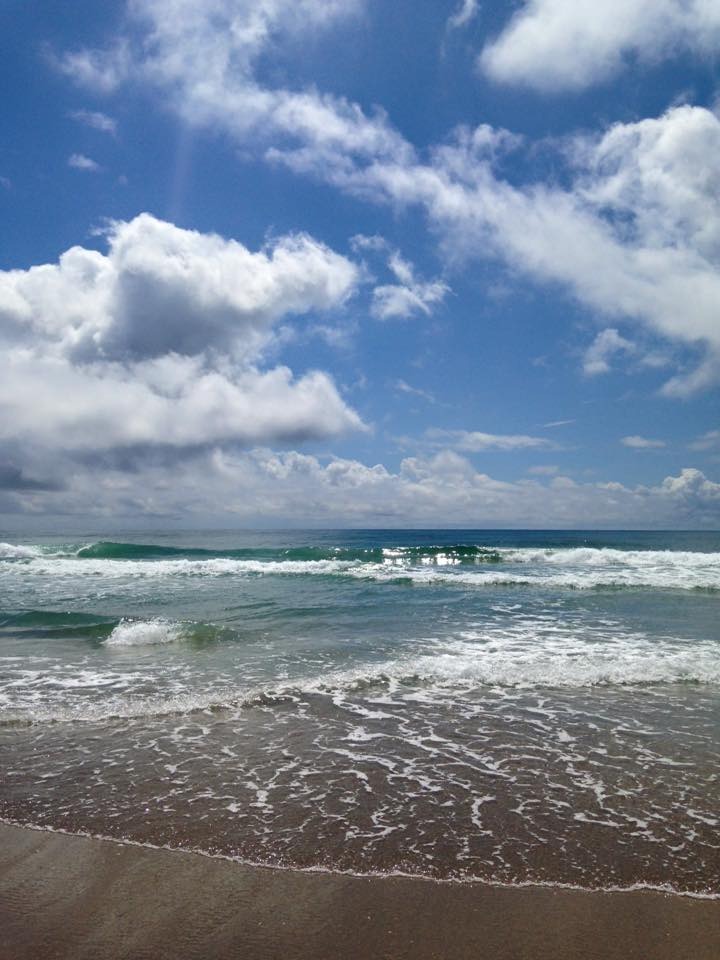
When you’re heading out for a full day of body surfing and boogieboarding, you better not forget the zinc. I slathered a thick neon blue stripe across my nose and cheeks like warpaint, grabbed my board and padded off down the salt-weathered boardwalk. My boyfriend was already by the shoreline, arms outstretched to the sky, basking in a blinding reflective glare that reduced your eyes to slits.
We tucked our cooler of supplies under a pile of towels beneath a rainbow-hued beach umbrella and hit the waves without an imaginable care in the world. Hold it...steady now....catch the perfect wave. Crash over the crest and bounce as the waves fling you to shore....ride your board into the sand until you drag along the fine sand. Marvel momentarily at the sand fleas and coquina clams digging busily into the surf. Rinse, repeat. Unpack cooler supplies, imbibe, repeat.
At some indistinguishable moment of time, the waves began to change. I was busy smiling at my sandy-haired boyfriend, who was equally unaware. We never saw it coming. A rogue wave rose like a giant hand from the sea and slapped us hard in the back of our heads, and into the washing machine we went — end over end over end — tumbling furiously toward the coastline. The impact snapped the board leash from my wrist as easily as a thread, yanked my bathing suit till it cut my flesh, and embedded seabed shells hard into my legs. I finally could hold my breath no longer and pulled in a breath of seawater. Suddenly, there was air, sunshine! I choked desperately for a blessed moment when a second, bigger wave crashed over me and dragged me by my hair to the bottom.
They say your life flashes before you at moments like these. I saw no such thing. I knew only the sensation of total chaos — a feeling of truly helpless surprise and wonderment. I was a strong, decorated swimmer with triathlons under my belt and in the prime of youth, yet reduced in a moment to seaweed in the waves.
More water-soaked lungs. Another tease of air. Another massive wave. Down to the bottom where hundreds of years' worth of shipwrecks still marinate in the brine, and crabs nibble at the feathery flesh of waterlogged unfortunates.
I kicked and pulled and fought until the waves spontaneously retched us both onto the sand. We crawled on our hands and knees to safety and collapsed. I laid on the shore so long my bathing suit filled with pounds of wet sand and sea birds tiptoed closely by, no longer considering me a threat.
Later, in a hot shower, I wept for the near loss of my life. My eyes were rasped by the salt and sand, and I remember the room around me seemed to radiate with an unnatural pink-red hue, pulsing with my heartbeat like a warning alarm.
***
A small number of residents from the Outer Banks live in such isolation that they have preserved a unique brogue known as "Hoi Toider." Linguists have confirmed that their dialect is a remnant of speech used in Britain in the 1600s. My high school math teacher was an Ocracoke Island native, a place only accessible to this day by ferry, and I used to marvel at his speech which sounded like a mix of Irish, Scottish, and Australian accents. “Dingbatters,” he would call us when he was pissed at our lack of concentration, which I later determined was a word to describe people from the mainland.
The Outer Banks islands you see today are mere geological babies at only 500-3000 years old. Every time you visit, you are presented with new terrain to explore, which is often done by boat. Local operators run short sunset cruises around the islands, offering rum-based drinks called “pirate juice” and cheap beer to passengers.
On one such cruise, our captain, a rusty-haired Hoi Toider wearing a weather-beaten Lynyrd Skynyrd t-shirt told us to be on the lookout. “The banskies are out,” he told us. “Keep yer peepers peeled.” I looked out over the calm evening water, its color a glossy sapphire shade, and quietly thought about the ponies.
How in the world did they survive that fateful day long ago? It must have made quite a sight as untold numbers of them desperately tread the foreign sea and shook themselves dry on the shore — an alien landscape to a Spaniard. For hundreds of years, they adapted and learned to nourish themselves on sea oats, tough serrated grasses, and wild persimmons. They learned to endure the scorching summer heat, to paw the sand to reach fresh water, to suffer storms, and swim to nearby islands for the best grazing. They learned to thrive.
The warm wind that day was blissful, salty, perfect. It rustled the sea oats and orange gaillardia blossoms growing on the bank of a steep inlet. I will never forget the sunset that evening — how the sky glowed, the friendly warm breeze and how it blew the hair from my eyes the very moment our boat rounded the cape as a herd of wild mustangs came running over the hill. The sun lit their oaky hides ablaze and we watched in complete gratitude and amazement as they thundered past. In that moment, it seemed as if those wild Spanish ponies belonged right there on the islands more than anything possibly could.
Post a comment